




Is Tabby Spunlace Nonwoven Fabric resistant to insects?
 Jun 17, 2025|
Hey there! As a supplier of Tabby Spunlace Nonwoven Fabric, I often get asked about its various properties, and one question that pops up quite a bit is, "Is Tabby Spunlace Nonwoven Fabric resistant to insects?" Let's dig into this topic and find out.
First off, let's understand what Tabby Spunlace Nonwoven Fabric is. It's a type of nonwoven fabric that's made through a spunlacing process. In simple terms, high - pressure water jets entangle fibers together to form a strong and flexible fabric. This fabric has a wide range of applications, from Reusable Wipers to Cleaning Clothes and Industrial Paper Polyester Cellulose Wipes.
Now, when it comes to insect resistance, there are a few factors to consider.
Fiber Composition
The materials used to make Tabby Spunlace Nonwoven Fabric play a huge role in its insect - resistance. Most of the time, this fabric is made from a blend of wood pulp and polyester fibers. Wood pulp, being a natural material, might seem like it could attract insects. After all, insects love munching on wood and plant - based materials. However, in the process of making the nonwoven fabric, the wood pulp is highly processed. The fibers are broken down, treated, and combined with other materials, which changes their chemical and physical properties.
Polyester, on the other hand, is a synthetic fiber. Insects generally don't have a taste for synthetic materials because they can't digest them. Polyester doesn't provide the nutrients that insects need, so it's not an appealing food source. So, the presence of polyester in the Tabby Spunlace Nonwoven Fabric acts as a deterrent to insects.
Surface Texture
The surface texture of the fabric also matters. Tabby Spunlace Nonwoven Fabric has a relatively smooth surface. Insects, especially those that rely on rough or porous surfaces to grip and move around, find it difficult to navigate on a smooth fabric. For example, ants and beetles use tiny claws and hairs on their legs to hold onto surfaces. A smooth nonwoven fabric doesn't offer them much to hold onto, making it less likely for them to stay on the fabric for long.
Chemical Treatments
In some cases, Tabby Spunlace Nonwoven Fabric can be treated with special chemicals to enhance its insect - resistance. These chemicals can act as repellents, making the fabric unappealing or even toxic to insects. Some treatments release a scent that insects find unpleasant, while others create a physical barrier that insects can't penetrate.
However, it's important to note that these chemical treatments need to be carefully balanced. We don't want to use chemicals that are harmful to humans or the environment, especially since the fabric is used in products like cleaning clothes and wipes that come into contact with our skin and household surfaces.
Real - World Testing
In real - world scenarios, we've seen that Tabby Spunlace Nonwoven Fabric holds up well against insects. In storage facilities, where the fabric is kept for long periods, there have been very few reports of insect infestations. When used in products like reusable wipers in homes and industries, the fabric doesn't attract insects even in areas where insects are commonly found.
But, it's not completely foolproof. In extreme conditions, such as in areas with a very high insect population or where the fabric is contaminated with food residues, insects might still be attracted to it. Food residues can provide the nutrients that insects are looking for, and they might overlook the fabric's natural deterrents.
Limitations
While Tabby Spunlace Nonwoven Fabric has good insect - resistance, it's not invincible. Some insects, like certain types of moths, have strong jaws that can chew through even synthetic fabrics if they're determined enough. Also, if the fabric is exposed to a large number of insects over a long period, there's a chance that some insects might find a way to damage the fabric.
Applications and Insect Resistance
Let's take a closer look at how the insect - resistance of Tabby Spunlace Nonwoven Fabric benefits its different applications.
Reusable Wipers
In households and industries, reusable wipers made from Tabby Spunlace Nonwoven Fabric are used to clean up spills and messes. Insects are often attracted to the spills, especially if they contain food or sugary substances. But because the fabric itself is insect - resistant, it doesn't add to the problem. You can use these wipers without worrying about insects being attracted to the fabric itself.
Cleaning Clothes
Cleaning clothes are used to wipe down surfaces in our homes, including kitchen countertops and bathroom sinks. These areas are prone to insect activity, but the insect - resistant fabric ensures that the cleaning clothes don't become a breeding ground for insects.
Industrial Paper Polyester Cellulose Wipes
In industrial settings, these wipes are used to clean machinery and equipment. Insects can cause damage to machinery by getting into small parts and causing blockages. The insect - resistance of the wipes means that they can be used without the risk of introducing insects to the machinery.
Conclusion
So, to answer the question, "Is Tabby Spunlace Nonwoven Fabric resistant to insects?" Yes, it is. Thanks to its fiber composition, surface texture, and in some cases, chemical treatments, the fabric has good insect - resistance. It's suitable for a wide range of applications where insect infestations could be a problem.
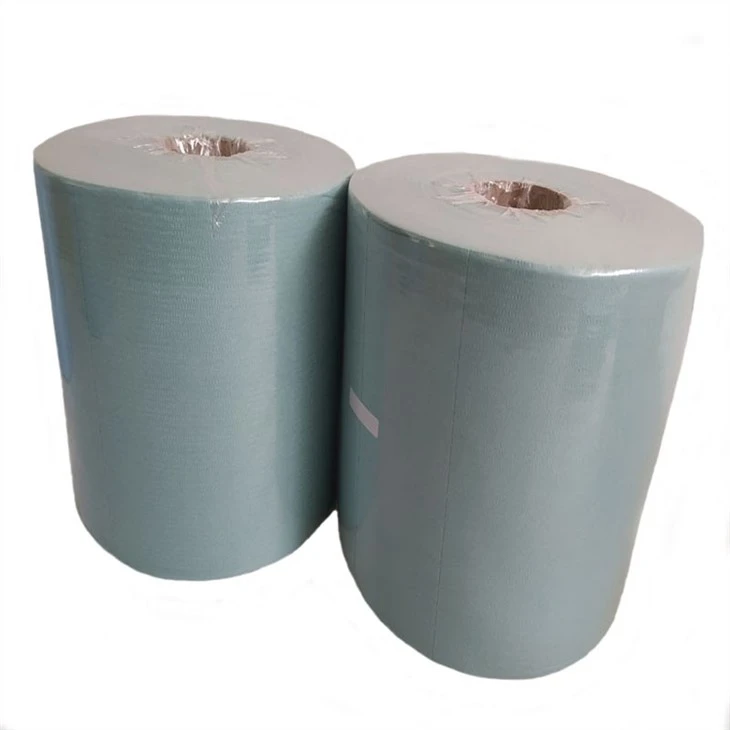

If you're in the market for high - quality, insect - resistant nonwoven fabric, look no further. Our Tabby Spunlace Nonwoven Fabric is a great choice for your needs. Whether you're making reusable wipers, cleaning clothes, or industrial wipes, our fabric will meet your expectations. Don't hesitate to reach out for a purchase or to discuss your specific requirements. We're here to help you find the best solution for your business.
References
- Nonwoven Fabrics: Principles, Production, Properties, Applications and Market. A. K. Chaudhuri.
- Handbook of Nonwovens. S. Das.