




What is the fire - resistance of woodpulp polypropylene nonwoven?
 Sep 30, 2026|
 Hey there! As a supplier of Woodpulp Polypropylene Nonwoven, I get asked a lot about its fire - resistance. So, I thought I'd dive into this topic and give you all the lowdown.
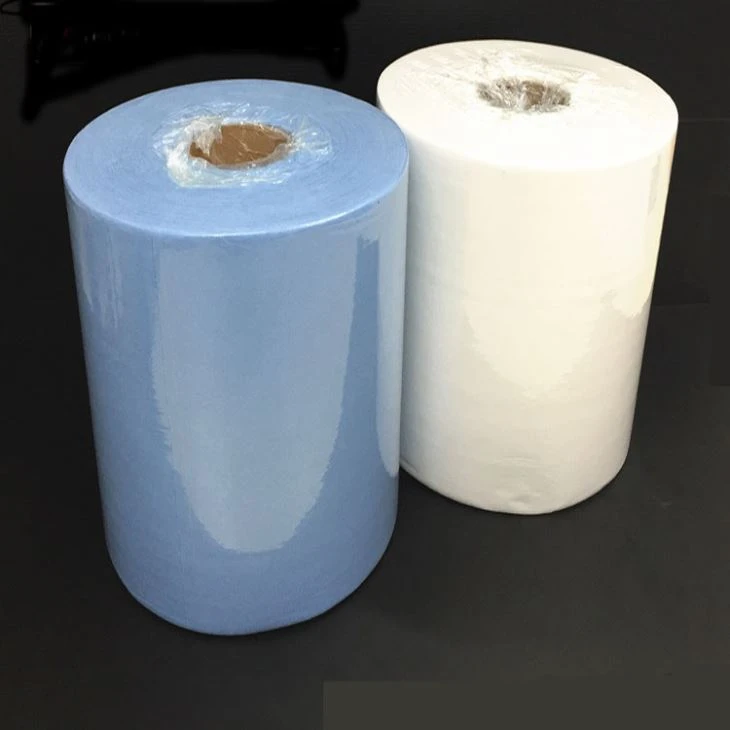
First off, let's understand what Woodpulp Polypropylene Nonwoven is. It's a unique material that combines the properties of woodpulp and polypropylene. Woodpulp brings in natural fibers, which are absorbent, soft, and biodegradable. On the other hand, polypropylene is a synthetic polymer known for its strength, durability, and resistance to moisture. When these two are combined, we get a nonwoven fabric that has a wide range of applications, from Plain Spunlace Nonwoven Wiping Cloth to Industrial Workshop Cleaning.
Now, let's talk about fire - resistance. Fire - resistance in materials is super important, especially in applications where there's a risk of fire. Think about industrial settings, for example. If a fabric used in cleaning or other operations is not fire - resistant, it could pose a serious safety hazard.
Woodpulp, on its own, is not very fire - resistant. It's a natural organic material, and like most organic stuff, it burns easily. When exposed to a flame, woodpulp will catch fire and burn relatively quickly. Polypropylene, however, has a higher melting point compared to many other plastics. It doesn't catch fire as easily as woodpulp, but once it does, it can melt and drip, which can spread the fire.
So, when we talk about the fire - resistance of Woodpulp Polypropylene Nonwoven, it's a bit of a mixed bag. The initial reaction to fire depends on the ratio of woodpulp to polypropylene in the nonwoven. If there's a high proportion of woodpulp, the fabric will be more likely to catch fire quickly. But if the polypropylene content is significant, it can offer some degree of delay in ignition.
To assess the fire - resistance of our Woodpulp Polypropylene Nonwoven, we use several standard tests. One of the most common tests is the Vertical Flame Test. In this test, a sample of the fabric is held vertically, and a flame is applied to the bottom. The time it takes for the fabric to ignite, how long it burns after the flame is removed, and whether it drips are all recorded.
Another important aspect is the Limiting Oxygen Index (LOI). The LOI measures the minimum concentration of oxygen in an oxygen - nitrogen mixture that will support combustion. A higher LOI value means the material is more fire - resistant. For our Woodpulp Polypropylene Nonwoven, we've found that by adjusting the manufacturing process and the ratio of woodpulp to polypropylene, we can increase the LOI to a certain extent.
In some cases, we also use flame - retardant additives. These additives are chemicals that can be added during the manufacturing process to make the fabric more fire - resistant. They work by either releasing gases that dilute the oxygen around the fabric, forming a protective char layer on the surface of the fabric, or interfering with the chemical reactions that occur during combustion.
However, using flame - retardant additives has its pros and cons. On the plus side, it can significantly improve the fire - resistance of the Woodpulp Polypropylene Nonwoven. But on the negative side, some of these additives can be expensive, and there may be environmental and health concerns associated with certain types of flame - retardants.
When it comes to applications, the fire - resistance of our Woodpulp Polypropylene Nonwoven makes it suitable for various uses. In Industrial Workshop Cleaning, where there might be sparks or heat sources, a fabric with at least some level of fire - resistance is crucial. It can also be used in sealing and insulation applications where there's a need to prevent the spread of fire.
Now, you might be wondering how our Woodpulp Polypropylene Nonwoven compares to other similar nonwoven materials in terms of fire - resistance. Well, compared to pure woodpulp nonwovens, our product is definitely more fire - resistant thanks to the polypropylene content. But when compared to some specialized fire - resistant nonwovens made from materials like aramid fibers, our Woodpulp Polypropylene Nonwoven may not be as effective. However, it offers a good balance between cost, performance, and other properties like absorbency and strength.
If you're in the market for a nonwoven fabric that has some level of fire - resistance and also offers other useful properties, our Woodpulp Polypropylene Nonwoven could be a great choice. We've spent a lot of time and effort in optimizing the manufacturing process to get the best possible fire - resistance while maintaining other important characteristics.
If you have any questions about the fire - resistance of our Woodpulp Polypropylene Nonwoven or other aspects of our product, don't hesitate to reach out. We're always happy to discuss your specific needs and see how we can help you find the right nonwoven solution for your application. Whether you need it for Plain Spunlace Nonwoven Wiping Cloth production, Industrial Workshop Cleaning, or any other use, we're here to assist.
Let's start a conversation and see how our Woodpulp Polypropylene Nonwoven can fit into your business. We're looking forward to hearing from you!

References
- ASTM International Standards on Fire - Testing of Nonwoven Fabrics
- Technical Papers on Nonwoven Materials and Their Properties